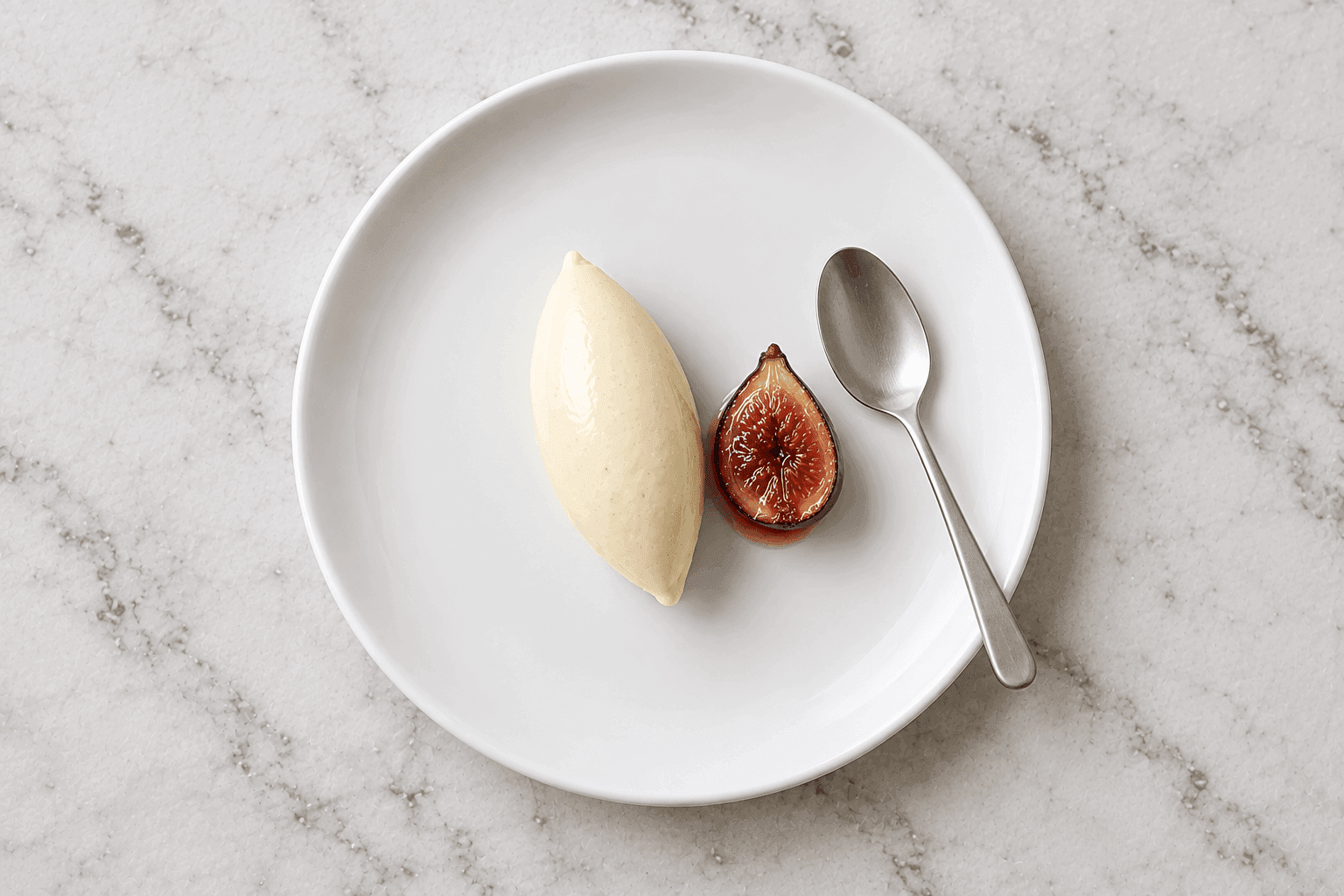
Fresh fig leaves taste nothing like figs. Steeped in warm cream, they release a green, slightly coconut like flavor that is hard to place until you have tasted it, closer to tonka bean or toasted hay than anything fruity. This fig leaf and honey ice cream comes from David Lebovitz, the American food writer and former Chez Panisse pastry chef, who discovered the flavor while living in Paris and pairing the ice cream with ripe figs from a local market. Part of our recipe collection.
The technique is a classic custard base, egg yolks, cream, milk and sugar cooked gently until it coats a spoon, but the fig leaf infusion is what makes it worth seeking out. It needs fresh leaves straight from a fig tree, not a shop, which makes it a genuinely seasonal project for late summer when fig trees are in full leaf.
Young, tender fig leaves have a more pronounced flavor than older, leathery ones, so pick from new growth if possible. Fig leaves also contain an enzyme that can cause the dairy to curdle slightly during infusion, this is normal and whisking the custard back together, or blending it briefly with an immersion blender, fixes it completely.
Yes. Fig leaves are safe to eat and have been used in Mediterranean and Middle Eastern kitchens for centuries, wrapped around cheese, grilled fish, or steeped in cream exactly as they are here. They are not eaten raw and whole like a salad leaf, the flavor is far too intense for that, but infusing them in a warm liquid extracts their aroma while leaving the leaf itself behind. Choose leaves that have not been sprayed with pesticide, and rinse them well before toasting.
Lebovitz serves this alongside fresh figs, and it also works well with poached pears or a spoonful of cherry compote. In Portugal, late summer is exactly fig season, so pairing the ice cream with figs picked at their ripest is an easy match.
6 medium fresh fig leaves
500 ml (2 cups) heavy cream, divided
250 ml (1 cup) whole milk
75 g (6 tablespoons) sugar
Pinch of salt
5 large egg yolks
60 g (3 tablespoons) honey, warmed if needed

Sign Up today to get into our cooking world. You will receive for free our best tips, reviews, recipes and much more...
The Cooking World is a team of professionals passionate about the world of food from diverse areas.
Our purpose is to share our passion and knowledge with everyone to teach how they can cook more and have a good time while doing it.