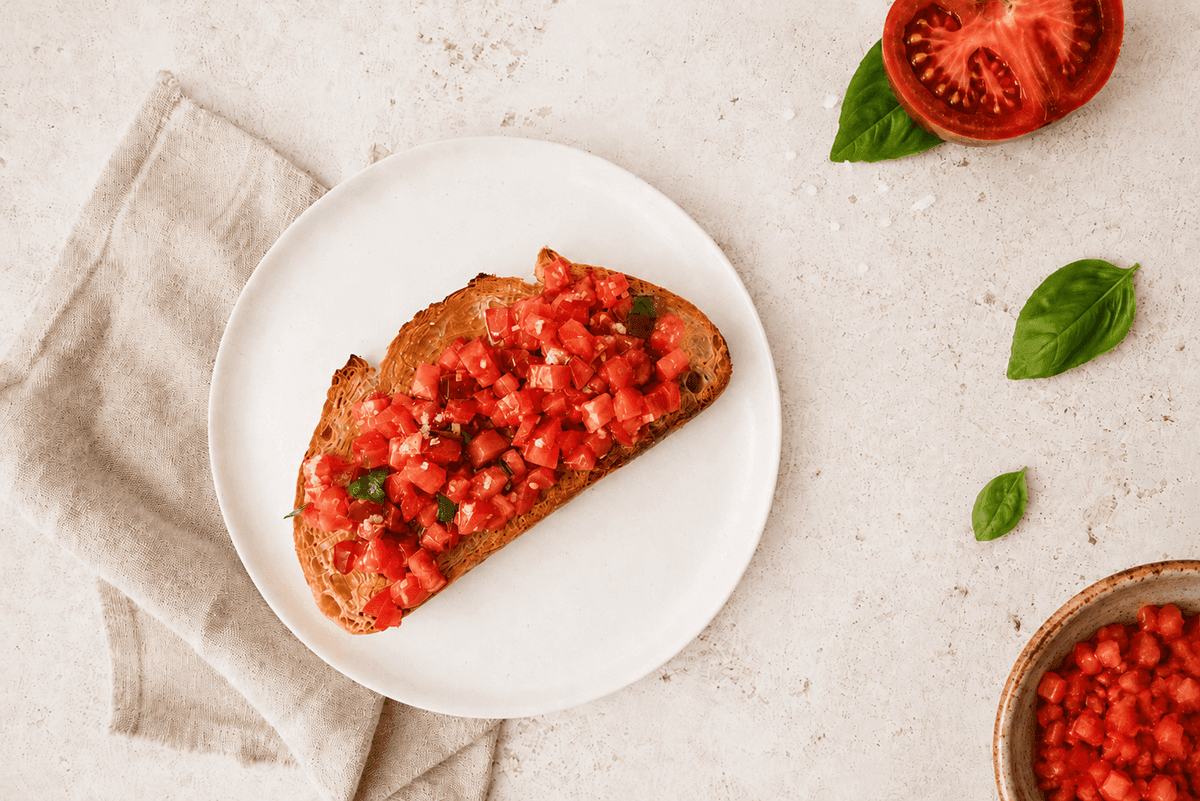
Bruschetta is not a topping. The word refers to the bread: grilled, rubbed with raw garlic while still hot, and drizzled with good olive oil. In Italy, the tomatoes on top are the second part of the equation, not the definition. Understanding this changes how you make it. The bread needs to be properly grilled or broiled until it has actual char and crunch, because the texture of the toast is what holds the tomatoes without turning soggy. Bread lightly toasted in a pop-up toaster is what gives bruschetta a bad reputation outside of Italy.
The tomatoes matter as much as the bread. This is not a recipe that improves with technique when the base ingredients are poor. In summer, ripe Roma or vine tomatoes work well. The rest of the year, cherry tomatoes are a better choice than large tomatoes picked unripe and refrigerated. Salting and draining the tomatoes before using is the step most recipes skip, and it is the reason most homemade bruschetta turns watery within a few minutes of serving.
A rustic loaf with an open crumb works better than soft sandwich bread, which compresses and turns chewy under the tomatoes. A day-old baguette, sourdough, or ciabatta cut into half-inch slices is the right starting point. Slices thinner than that will char too quickly and become brittle; thicker than three-quarters of an inch and the bread-to-topping ratio is off. Brush lightly with olive oil before grilling, just enough to encourage color rather than fry the bread.
The best bruschetta is a summer recipe because it depends on tomatoes that actually taste of something. Ripe Roma tomatoes or vine-ripened tomatoes, diced small and salted, produce a topping with the right texture: enough liquid to be juicy, not so much that the toast drowns. In winter, substitute cherry tomatoes halved or quartered rather than using large tomatoes out of season. Bruschetta also works well as part of a larger antipasto spread alongside a dish like grilled burrata, where the richness of the cheese balances the acidity of the tomatoes.
1 baguette, sourdough loaf, or ciabatta, sliced ½-inch thick (about 12 slices)
500 g (about 4 medium) very ripe tomatoes, cored and diced small
3 cloves garlic (2 halved for rubbing, 1 finely minced)
1 handful fresh basil leaves, torn
3 tablespoons extra-virgin olive oil, plus more for drizzling
1 teaspoon red wine vinegar
1 teaspoon flaky sea salt, divided
Freshly ground black pepper

Sign Up today to get into our cooking world. You will receive for free our best tips, reviews, recipes and much more...
The Cooking World is a team of professionals passionate about the world of food from diverse areas.
Our purpose is to share our passion and knowledge with everyone to teach how they can cook more and have a good time while doing it.