Shokupan: Japanese Milk Bread

Shokupan: Japanese Milk Bread
By The Cooking World, Editorial Staff
November 2, 2026

Shokupan: Japanese Milk Bread

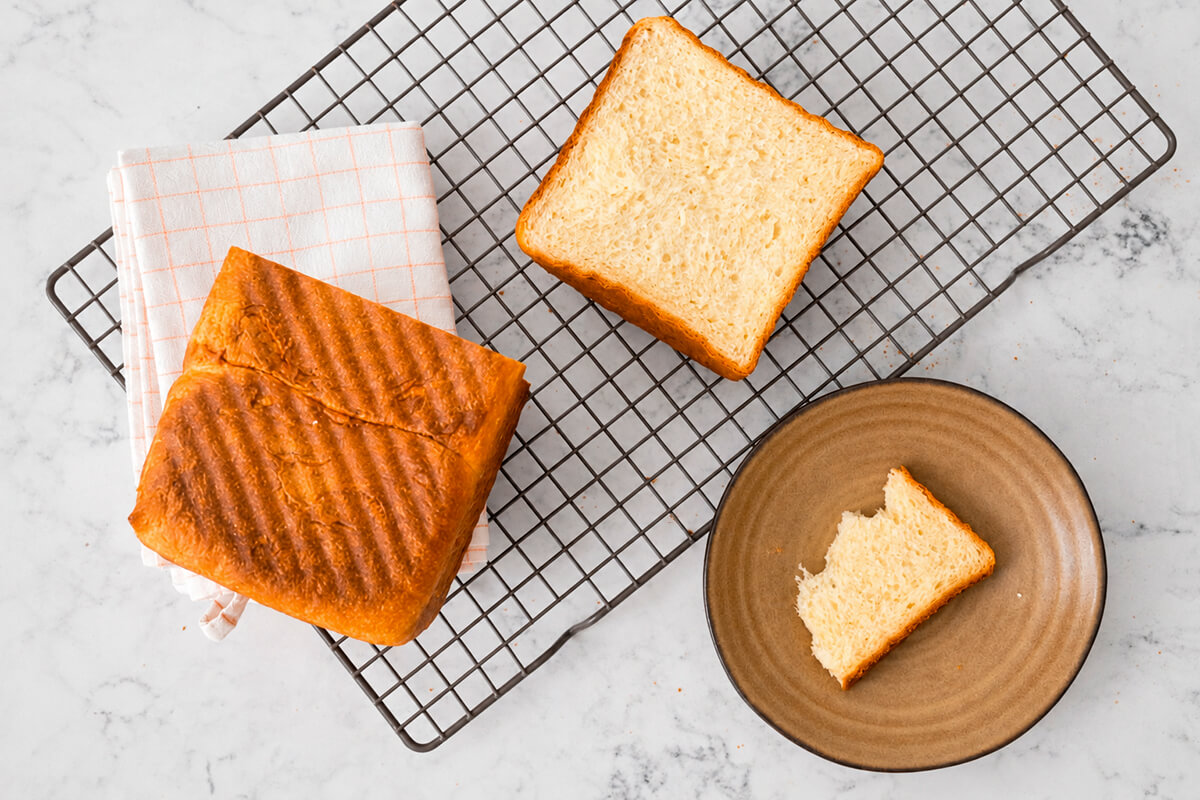
This Japanese milk bread recipe makes shokupan, the everyday white loaf found in every Japanese bakery and convenience store. What sets it apart from a standard sandwich loaf is the texture: an impossibly soft, cottony crumb that pulls apart in long, feathery strands and stays fresh for days. It uses a tangzhong, a cooked flour and milk paste, and a lidded Pullman pan to bake a perfectly square loaf with a thin, golden crust. Part of our recipe collection.

It is a weekend project rather than a weeknight one. Most of the time is hands off, waiting for the dough to rise, but the kneading needs patience. The reward is a loaf that makes the best toast you will ever have and the classic base for a Japanese fruit or egg sando.

What Is Shokupan?

Shokupan translates simply as "eating bread," and in Japan it is the default sliced loaf, sold thick cut for toast or thin for sandwiches. It is an enriched dough, made with milk, sugar and butter, which gives it a tender crumb and a gently sweet, milky flavor. Most versions are baked in a Pullman pan, a straight-sided loaf pan with a sliding lid, which is why the loaf comes out perfectly square.

Shokupan vs. Hokkaido Milk Bread

The two names are often used interchangeably, especially outside Japan, and both describe a soft, enriched white loaf. Hokkaido milk bread usually refers to a richer version, named after the dairy region of northern Japan, with more milk or cream in the dough and often baked without a lid for a domed top. Shokupan is the broader, everyday term for the square sandwich loaf.

Why It Works

  • The tangzhong is the key. Cooking a small portion of the flour with milk to about 65°C (149°F) gelatinizes the starch, so it absorbs and holds far more liquid than raw flour can. More water in the dough means a softer, moister crumb and a loaf that stays fresh longer.
  • Milk powder and an extra egg yolk add richness and color, giving the crumb its milky flavor and the crust its deep golden finish.
  • Kneading all the way to the windowpane stage develops a strong, elastic gluten network. That is what lets the dough stretch thin and trap gas, giving the bread its fine, even, shreddable texture.
  • Shaping the dough into three tightly rolled logs, instead of one single piece, creates the signature three-domed structure inside the loaf and a crumb that peels apart in layers.
  • Baking with the lid closed forces the dough to rise into the corners of the pan, producing the square shape, a tight crumb and a thin, even crust all around.

How to Make Tangzhong

Tangzhong is a simple roux of flour and liquid, cooked into a paste before it goes into the dough. This recipe uses 30 g of flour to 220 g of milk, a looser ratio than the common 1 to 5, which adds even more moisture to the loaf. The same method works for any soft bread or bun recipe.

  1. Whisk the flour into cold milk in a small saucepan until there are no lumps. Starting cold is what keeps it smooth.
  2. Cook over low heat, stirring constantly. The mixture will suddenly thicken into a glossy paste, similar to a loose pudding, with whisk lines that hold their shape. If you have a thermometer, that happens at around 65°C (149°F).
  3. Transfer to a bowl and let it cool until just warm before adding it to the dough, since a hot paste can harm the yeast. Covered, it keeps in the fridge for up to a day; bring it back to room temperature before using.

On Kneading and the Windowpane Test

This is an enriched, fairly sticky dough, and it takes longer to knead than lean bread. In a stand mixer on medium low speed, plan on 20 to 30 minutes, sometimes more. The dough is ready when it pulls cleanly away from the sides of the bowl and passes the windowpane test: pinch off a small piece and gently stretch it between your fingers. If it stretches thin enough to let light through without tearing, the gluten is fully developed. If it tears, keep kneading and test again in a few minutes.

Can You Make Shokupan Without a Pullman Pan?

Yes. A standard loaf pan of a similar size works well. Without a lid, the loaf will rise into a tall, domed top, known in Japan as yamagata shokupan, instead of a square one. Bake it uncovered at 180°C (350°F) for about 30 minutes, tenting with foil if the top browns too quickly.

Storing

Let the loaf cool completely before slicing, at least 2 hours, or the crumb will turn gummy. Keep it wrapped at room temperature for up to 3 days, or slice and freeze it, then toast straight from the freezer.

PREP TIME
4 hours
COOK TIME
30 minutes
serves
1 loaf, about 14 slices

Ingredients

For the tangzhong
30 g (1/4 cup) bread flour
220 g (scant 1 cup) whole milk, cold

For the dough
370 g (3 cups) strong bread flour
20 g (3 tablespoons) milk powder
40 g (3 tablespoons plus 1 teaspoon) granulated sugar
8 g (2 1/2 teaspoons) instant yeast
10 g (1 3/4 teaspoons) fine salt
60 g (4 tablespoons) unsalted butter, softened, plus melted butter for the pan
60 g (1/4 cup) whole milk
1 large egg plus 1 egg yolk, room temperature

Special Equipment

Check out these products

Instructions

  1. Make the tangzhong: in a small saucepan, whisk the flour into the cold milk until there are no lumps. Cook over low heat, stirring constantly, until it thickens into a smooth, glossy paste, about 65°C (149°F). Transfer to a bowl and let cool until just warm.
  2. Add the bread flour, milk powder, sugar, yeast, salt, softened butter, milk, egg and egg yolk to the bowl of a stand mixer, then add the cooled tangzhong. Mix on low speed with the dough hook until a shaggy dough forms, scraping down the bowl as needed.
  3. Increase to medium low speed and knead until the dough is smooth, elastic and passes the windowpane test, 20 to 30 minutes or more. It should stretch thin enough to see light through without tearing.
  4. Transfer the dough to a clean bowl, cover with a damp towel or plastic wrap, and let rise at room temperature until doubled in size, 1 to 1 1/2 hours.
  5. Brush the inside of the Pullman pan and its lid generously with melted butter.
  6. Gently deflate the dough and divide it into 3 equal pieces, weighing them for accuracy. Shape each piece into a tight ball.
  7. On a lightly floured surface, place one ball smooth side down. Gently stretch the sides out and fold them back into the center to form a rectangle, then roll it out with a rolling pin to about 30 to 40 cm (12 to 16 inches) long.
  8. Fold both long edges in to meet in the middle, then roll the dough up tightly from the short end into a log. Repeat with the remaining pieces.
  9. Place the three logs side by side in the pan, seam side down. Cover and let rise until the dough almost reaches the rim of the pan, 45 to 60 minutes.
  10. Meanwhile, preheat the oven to 200°C fan (220°C conventional, 425°F).
  11. Slide the lid onto the pan and bake for 30 minutes.
  12. Carefully remove the pan from the oven, let it stand for 1 minute, then remove the lid. Tap the pan firmly against the counter to release the loaf and turn it out onto a wire rack. Let cool completely before slicing.
Are You Ready To Get Hungry?

Sign Up today to get into our cooking world. You will receive for free our best tips, reviews, recipes and much more...

Thank you! Your submission has been received!
Oops! Something went wrong while submitting the form.
Check our other recipes